


藻类赋能
创造价值
藻类赋能
创造价值
创造价值
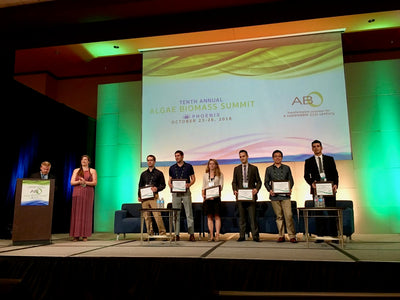
Sinton 教授讲解藻类奥秘
 跳到内容
跳到内容

Natural Power
从自然中汲取力量:微藻带来的健康新可能
藻类是一类多样化的水生生物,几乎存在于地球上的每一个环境中。它们的体型从微小的单细胞微藻到可长达 150 英尺的巨型海带不等。藻类对地球健康至关重要,它们可产生高达 80% 的我们呼吸的氧气,同时也是许多水生动物的重要食物来源。
尤其是微藻,它们是地球上最古老、适应能力最强的生物之一,拥有数十亿年的历史。尽管地球经历了无数挑战和变化,这些微小生物仍能繁衍生存,展现出令人难以置信的韧性和生命力。实际上,微藻通过光合作用产生氧气,被认为在地球大气的形成过程中发挥了关键作用。
如今,微藻依然对地球健康至关重要。它们能够吸收有害的二氧化碳并释放氧气,帮助缓解气候变化的影响。微藻能高效地将阳光和营养转化为生物质,有些物种甚至能在短短数小时内实现数量翻倍。这种高生产力使得微藻在低成本、环保可持续的条件下生产多种生物基材料成为可能。微藻可用于生产营养补充品、蛋白质、碳水化合物和油脂,成为传统石化产品的有前景替代品。此外,微藻可在盐水或废水等多种环境中生长,使其在其他作物难以生长的地区也能作为宝贵的生物材料来源。
微藻有潜力彻底改变我们生产人类健康所需成分的方式。这些微小生物不仅环保可持续,还能生产多种具有显著健康益处的宝贵成分。其中最知名、研究最深入的成分之一是 虾青素(Astaxanthin)。这种强效抗氧化剂已被证明具有多种健康功效,包括改善心血管健康、减轻炎症以及抵御氧化应激。虾青素在护肤品中也非常受欢迎,可减少细纹和皱纹、改善皮肤弹性,并防护紫外线伤害。
过去,由于微藻研究技术的限制,虾青素的生产几乎不可能实现。然而,随着该领域的进步,我们现在可以成功识别并培养特定微藻株,收获、干燥并提取虾青素。在此之前,虾青素只能从虾等海洋生物中获取,但由于这些生物体内虾青素含量低且采集成本高,这种方法并不适合商业化生产。值得注意的是,这些海洋生物实际上是通过摄食藻类获得虾青素的,这也凸显了微藻在生产这一宝贵成分中的重要性。
除了虾青素,微藻还是 Omega-3 脂肪酸 的丰富来源。这些必需脂肪酸对整体健康至关重要,包括心血管健康、大脑功能和关节健康。Omega-3 脂肪酸还可帮助减轻炎症,对关节炎等人群尤其有益。
微藻还能生产 高生物利用率的蛋白质,易于人体吸收和利用,并富含必需氨基酸,是增加蛋白质摄入的理想选择。
微藻的未来不仅限于生产健康成分。它们有潜力在塑料、燃料,甚至化妆品等多个行业替代石化产品。使用微藻的环境效益显而易见:微藻可通过可持续方法种植,其碳足迹远低于传统石化产品。
总而言之,微藻是一种宝贵资源,具有彻底改变人类健康成分生产方式和替代石化产品的潜力。其可持续性、多功能性及众多健康益处,使微藻成为未来值得期待的选择。
Long before forests covered the land, microalgae were helping transform Earth’s atmosphere through oxygen-producing photosynthesis. Scientists believe these ancient microorganisms played a crucial role in creating the oxygen-rich environment that made complex life possible.
Today, microalgae continue to support planetary health by naturally absorbing carbon dioxide and releasing oxygen. As concerns about climate change and environmental sustainability grow, researchers are increasingly recognizing the potential of algae as part of a more sustainable future.
Unlike many traditional crops, microalgae can grow rapidly while utilizing relatively small amounts of land and resources. Some species are capable of doubling their population within hours under optimal conditions, making them one of the most productive biological systems on Earth.
Microalgae possess several unique characteristics that make them attractive for future technologies and sustainable manufacturing.
Exceptional Productivity
Microalgae are highly efficient at converting sunlight, carbon dioxide, and nutrients into valuable biological compounds. Their rapid growth rates enable continuous production of renewable resources with a relatively small environmental footprint.
Resource Efficiency
Many microalgae species can be cultivated using non-arable land, saline water, or other environments unsuitable for conventional agriculture. This reduces competition with food crops while maximizing resource utilization.
Carbon Capture Potential
As natural photosynthetic organisms, microalgae absorb carbon dioxide during growth, making them an attractive platform for future carbon management and sustainability initiatives.
Renewable Biological Platform
Microalgae can serve as biological factories capable of producing a wide range of valuable ingredients and materials for numerous industries.
One of the most exciting applications of microalgae is their ability to produce bioactive compounds that support human health and nutrition.
Researchers continue to explore microalgae as sustainable sources of:
These naturally occurring compounds are increasingly being incorporated into dietary supplements, functional foods, and wellness products around the world.
Among the many valuable compounds produced by microalgae, astaxanthin has emerged as one of the most extensively researched.
Natural astaxanthin is produced by the freshwater microalga Haematococcus pluvialis, widely recognized as the richest natural source of this remarkable carotenoid antioxidant.
Research has explored astaxanthin’s potential role in supporting:
Today, natural astaxanthin is one of the most sought-after ingredients in the global dietary supplement industry.
For many years, commercial production of natural astaxanthin remained challenging due to limited understanding of microalgae cultivation and processing.
Historically, astaxanthin could only be obtained in small amounts from marine organisms such as shrimp, krill, lobster, and salmon. However, these animals do not produce astaxanthin themselves—they accumulate it through their diet, which ultimately originates from algae.
Advances in biotechnology have transformed this industry by enabling scientists to identify, cultivate, and optimize specific strains of Haematococcus pluvialis for commercial astaxanthin production.
Modern cultivation systems, combined with advanced extraction technologies, now allow natural astaxanthin to be produced efficiently, sustainably, and at a quality suitable for human supplementation.
Microalgae are also one of the original sources of marine omega-3 fatty acids.
Long-chain omega-3s such as DHA and EPA, traditionally associated with fish oil, originate from algae at the base of the marine food chain.
These essential fatty acids are widely recognized for supporting:
As demand grows for sustainable and plant-based nutrition, algae-derived omega-3s continue to gain popularity worldwide.
Microalgae also offer significant potential as a future protein source.
Many species contain high-quality protein with a favorable amino acid profile, making them attractive ingredients for functional foods and alternative nutrition products.
Compared with traditional protein production systems, microalgae may offer advantages in land use efficiency, sustainability, and environmental impact.
As the global population continues to grow, algae-based proteins may play an increasingly important role in supporting future food security.
The future potential of microalgae extends far beyond human health and nutrition.
Researchers are actively exploring algae-derived alternatives for:
Because microalgae can be cultivated using renewable biological processes, these applications may help reduce reliance on fossil fuel-derived products while supporting a more circular economy.
At Astadaily, we believe algae represent one of the most promising natural resources of the 21st century.
Their ability to produce powerful health-promoting compounds, capture carbon dioxide, grow sustainably, and support future innovation makes them uniquely positioned to address some of the world’s greatest challenges.
By combining advanced cultivation technology with scientific research, we are helping unlock the potential of microalgae and bringing the benefits of natural astaxanthin to people around the world.
Microalgae have shaped life on Earth for billions of years and continue to demonstrate extraordinary potential for the future. From producing oxygen and capturing carbon dioxide to generating valuable compounds such as astaxanthin, omega-3 fatty acids, and proteins, these remarkable organisms offer solutions that support both human health and environmental sustainability.
As scientific innovation continues to advance, microalgae are poised to play an increasingly important role in nutrition, biotechnology, sustainable manufacturing, and the transition toward a more resilient future.